Envisioning Clean Energy in APAC
CHAPTER 3
An Urgent Priority
Sustainability is becoming more and more a priority for consumers, regulators and investors in APAC. Investors are becoming very sustainability savvy and are demanding action from corporations, and these corporations need initiatives they can show to investors by committing to ambitious sustainability goals.
Indeed, these factors are already contributing to many switching to renewable energy, as evidenced by the report. About 42% of respondents in APAC stated that the most important renewable energy goal is the contribution towards the preservation of the environment and promoting sustainability in society. In SEA, that number was 50%.
Internally, reducing energy costs for corporations is another key motivating factor in their adoption of renewable energy. Notably, SEA is leading the charge in energy cost reduction at 44% versus its regional counterparts – 38% in East Asia and 34% in Oceania.
These findings are aligned with sub-regional goals for becoming independent from fluctuations in energy prices caused by external factors, with 37% of SEA respondents ranking this reason for renewable adoption as very important, followed by East Asia (23%) and Oceania respondents (23%).
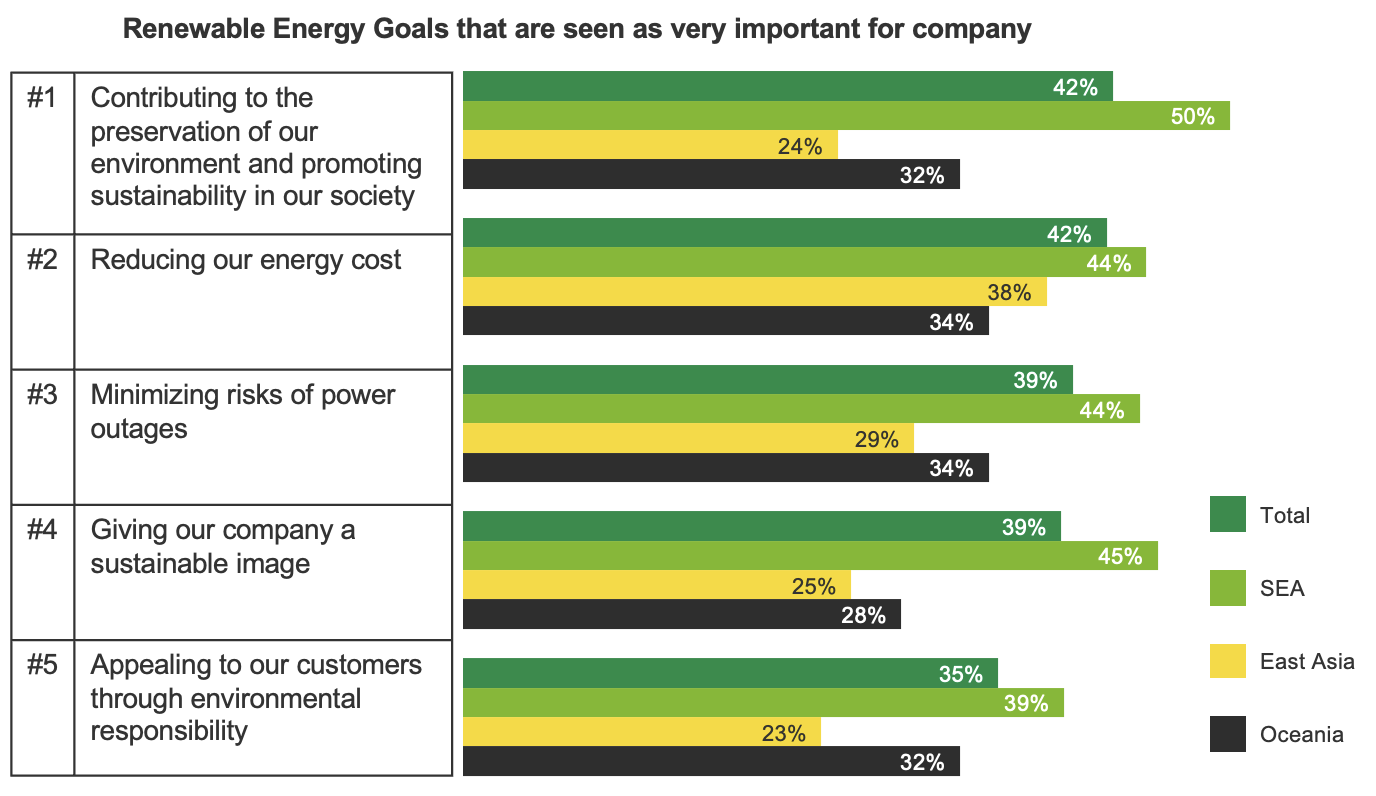
Corporations are also competing with each other in the sustainability space to remain relevant and attract new talent. 42% of respondents strongly agree that renewable energy gives their company an advantage in talent recruitment and retention, which may be driven by the perception of improved public image (54%) and results in a business advantage (50%). As a consequence, many are making clean energy goals a priority.
This priority is further driven by a perception that renewables help keep businesses ahead
% of companies who strongly agree that RE gives companies:
54%
a "better public image"
50%
a "business advantage"
42%
an "advantage in talent recruitment and retention"
This is evidenced especially in the Philippines. Four-fifths (81%) of the Philippines respondents indicated a "better public image" as a top perception for adopting renewable energy, while a similar proportion (77%) agreed on the business advantages renewable energy may bring, followed by 67% seeing the potential advantages for talent recruitment and retention. Indonesia showed similar sentiments, with the numbers at 71% for "better public image", 61% for "business advantage", and 48% for "advantage in talent recruitment and retention" respectively.
On the contrary, Japanese respondents have differing perceptions as only 32% agreed that adopting renewable energy gives a better public image, 30% indicated that renewable energy brings business advantage, while a slightly higher percentage (34%) saw the value renewable energy brings in talent recruitment and retention.
“There’s a strong leadership commitment to sustainability because they (corporations) see it as a driver of value for the business. Additionally, employees don’t just join a company for monetary reasons, they look at the values and ethos of the company and are willing to turn down offers if the values are not reflected. We’re seeing employees who are passionate about the issue and they play a huge role internally.”
- Clara Eboli, Head of HR, APAC, BayWa r.e.
Getting there
The journey ahead will still be arduous.
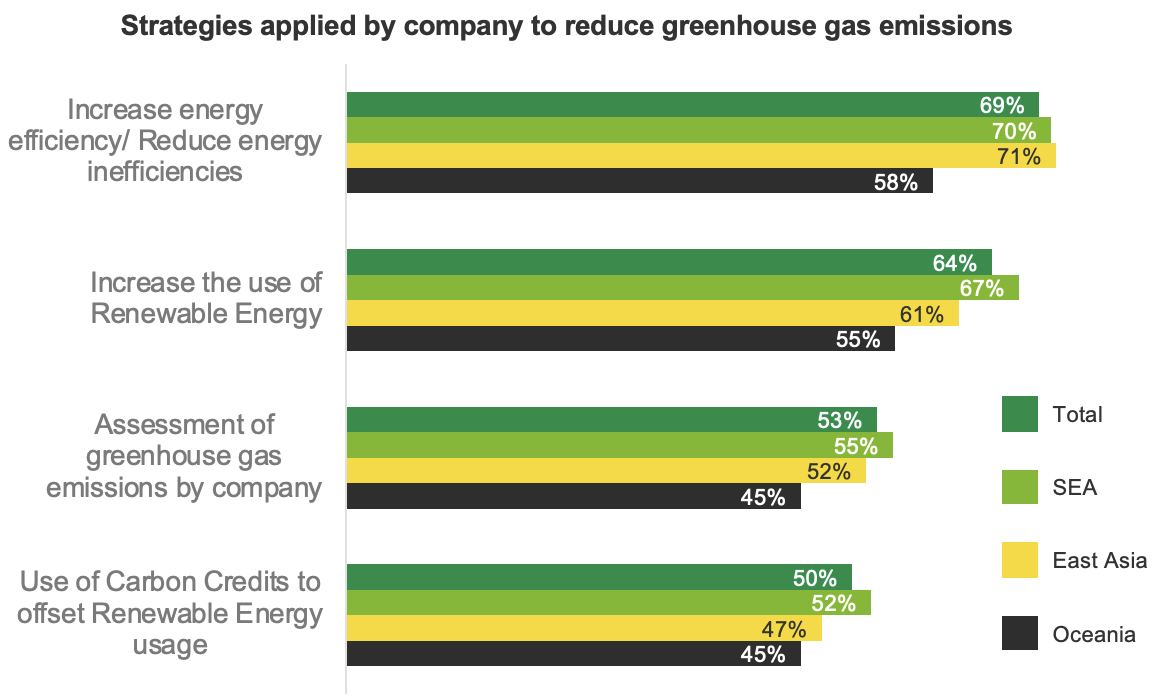
Renewables development in the region remains nascent, and reducing energy inefficiencies has become the top strategy (69% of respondents) for companies. This is closely followed by “increasing the use of renewable energy” (64%).
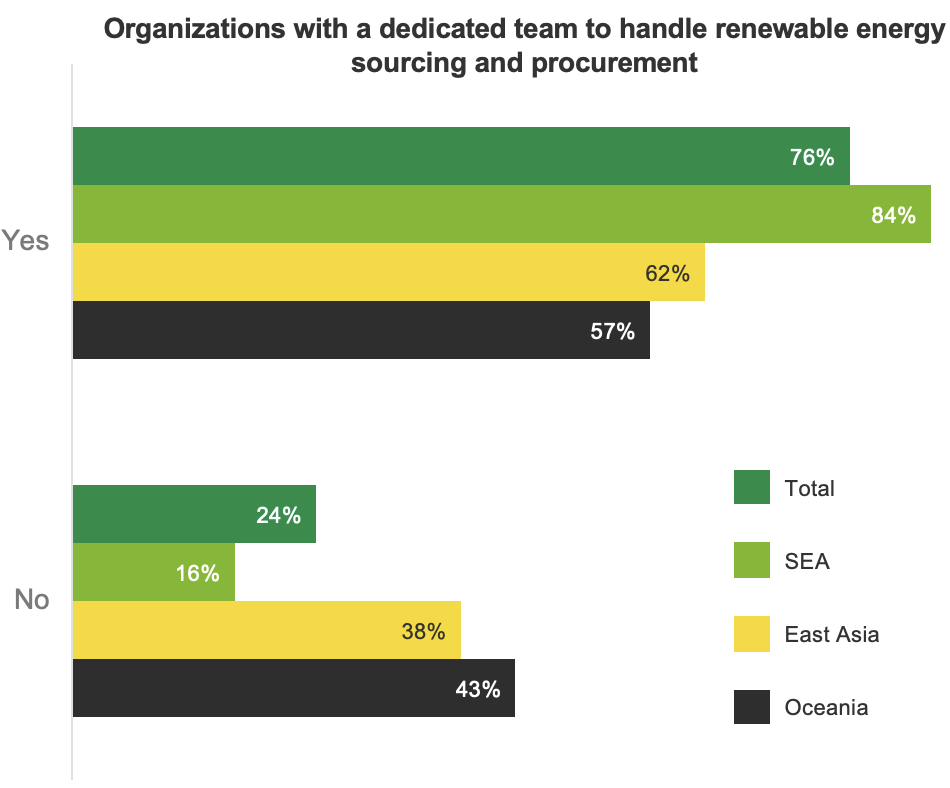
The majority of companies are expected to increase their use of renewable energy to between 41% and 60% in the next 6 to 10 years. To achieve these goals, 76% of organisations have employed dedicated teams to handle renewable energy sourcing and procurement to ensure the right people with the appropriate know-how are in place to introduce and implement the right solutions.
While SEA respondents (84%) are the most likely to have dedicated renewable energy teams, Australian (43%) and Japanese (44%) respondents are found to be the least likely to have such teams.
“Renewable energy is quite nascent in some APAC markets. The lowest hanging fruit is energy efficiency. They need to look at how they can reduce their energy consumption to a minimum and still operate efficiently as a corporation. Then move to increasing use of renewables such as solar systems on the roof instead of using coal, oil or gas. After you bring it down then look at carbon offsets.”
- Edwin Khew, Chairman of Sustainable Energy Association of Singapore
What renewables?
To ensure that they meet clean energy goals, companies are actively looking out for new renewable energy solutions and are keen to try solutions that are cost-effective and offer stability.
The data points from corporations currently indicate that wind and solar energy ranks high among the sources corporations within the region have access to. Slightly more than 60% already have access to wind and solar power onsite, and another 64% have access to the same offsite. In addition, a majority (67%) are aiming to procure either energy from wind or solar within the next five years.
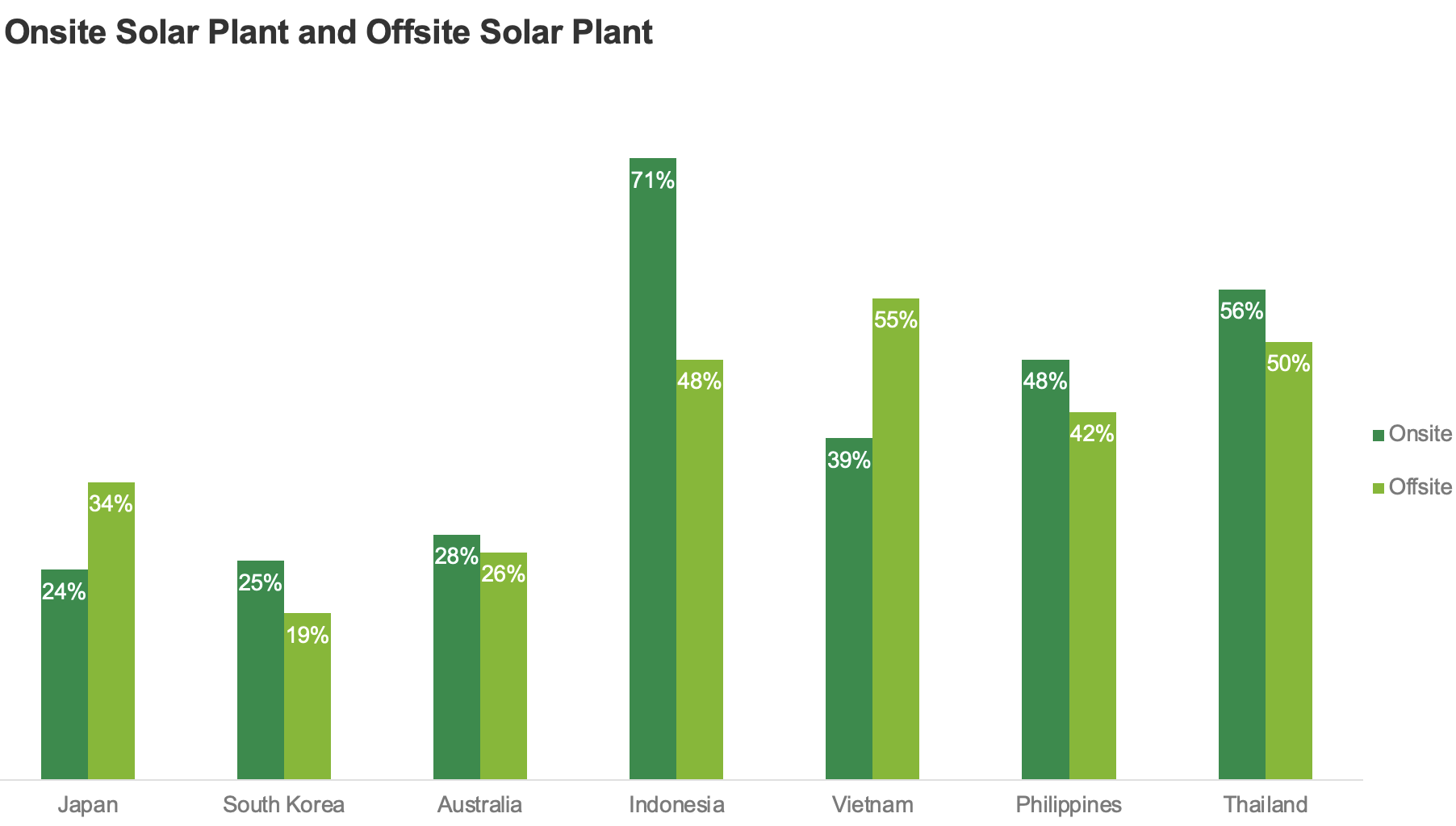
It is also common for corporations to have access to onsite solar plants versus offsite, especially for corporations in Indonesia (71%), Thailand (56%), and the Philippines (48%). This may also reflect the availability of resources and providers in these countries that enables them to adopt onsite solar as an effective means of transitioning to renewable energy.
Key Takeaways

Multi-stakeholder pressure for sustainable growth is encouraging corporations to focus on acquiring affordable and clean energy. Investor pressure is a primary driver, as they are becoming increasingly sustainability savvy and demand action. As a result, many companies are making clean energy goals a priority.

However, renewables development in APAC remains in a nascent stage. Many corporations see reducing energy inefficiencies as their first step. Nevertheless, transitioning to renewables is also a key goal for many. Benefits, including energy cost savings, business benefits and enhanced corporate image, are increasingly well recognised and have resulted in many companies pledging to increase their use of renewable energy over the next decade, especially in wind and solar energy.